
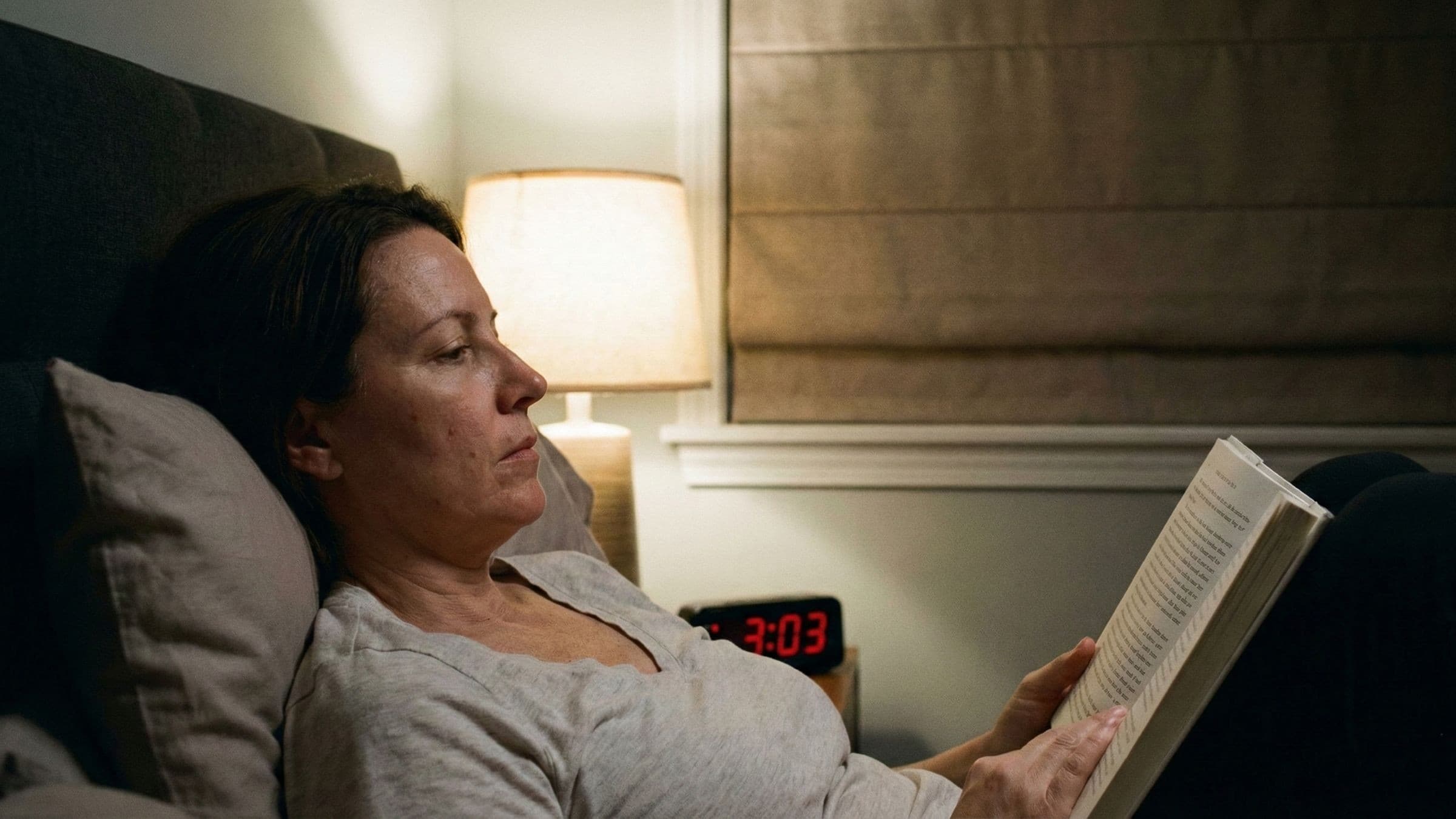
It's 3:03 AM. The house is silent, the street outside is dark and you're wide awake. You're not just slightly stirring; you're alert, perhaps feeling a sudden surge of heat or a racing heart. If this sounds familiar, you're certainly not alone.
The "witching hour" wake-up is one of the most pervasive and frustrating symptoms of the menopausal transition. Research indicates that between 40% and 60% of women in perimenopause and postmenopause report sleep difficulties1. This isn't just about feeling tired the next day; it's about the profound impact broken sleep has on your mood, your metabolism and your long-term health.
The good news is that this disruption is not a life sentence. While we often blame "hormones" in a vague sense, understanding the specific biological mechanisms - and how nutrition can influence them - gives you new tools to reclaim your rest. Let's look at what is happening inside your body and how to support it.
The Perfect Storm: Why You Wake Up
During the menopausal transition, your body undergoes a massive recalibration. The ovaries gradually stop producing estrogen and progesterone, two hormones that, among other jobs, act as guardians of your sleep.
Estrogen
Linked to your body's ability to regulate temperature and spend time in REM sleep2. As levels fluctuate and decline, your internal thermostat becomes twitchy, leading to hot flushes that physically jolt you awake.
Progesterone
Nature's sedative; it has a calming, anti-anxiety effect on the brain. When progesterone levels drop, you lose that natural "chill pill", leaving you more vulnerable to anxiety and alertness in the middle of the night.
But hormones are only one piece of the puzzle. There is a "phantom" cause that often goes undiscussed: blood sugar.
The Cortisol Connection
Many women report waking up with a pounding heart or a sense of sudden alertness. This is often a chemical reaction to what you ate (or didn't eat) the evening before.
If your blood sugar drops too low during the night - a phenomenon common in midlife due to shifting insulin sensitivity - your body perceives this as a fuel crisis. To save you, it releases a surge of adrenaline and cortisol to liberate stored glucose3. This biological rescue mission spikes your blood sugar back up, but the side effect is that it wakes you up. You're literally startled awake by your own stress hormones.
Quick Fact: A "night cap" is a misnomer. While alcohol might help you fall asleep faster, it destroys sleep quality later in the night. It prevents deep REM sleep and is a known trigger for hot flushes4.
Nutrition Strategies for Steady Sleep
We cannot eat our way to pre-menopausal hormone levels, but we can certainly eat to minimise the disruption they cause. The goal here is stability. We want to keep your blood sugar steady to prevent that 3 AM cortisol spike and we want to provide the raw materials your brain needs to build sleep neurochemicals.
1. The Anchor of the Evening Meal
To prevent the middle-of-the-night fuel crisis, look at your dinner plate. A meal high in refined carbohydrates (like white pasta or sugary sauces) might make you feel sleepy initially, but it sets you up for a crash later.
Instead, prioritise complex carbohydrates paired with protein and fibre. This combination ensures a slow, steady release of glucose into your bloodstream throughout the night. Think of it like putting a slow-burning log on the fire rather than a handful of paper.
- Salmon with quinoa and steamed broccoli.
- A turkey stir-fry with brown rice and plenty of peppers.
- Lentil dhal with wholemeal roti.
2. The Magnesium Factor
Magnesium is often called "nature's relaxant" for good reason. It aids in muscle relaxation and plays a key role in the regulation of the body's stress-response system. Research suggests that maintaining adequate magnesium levels can support sleep efficiency5.
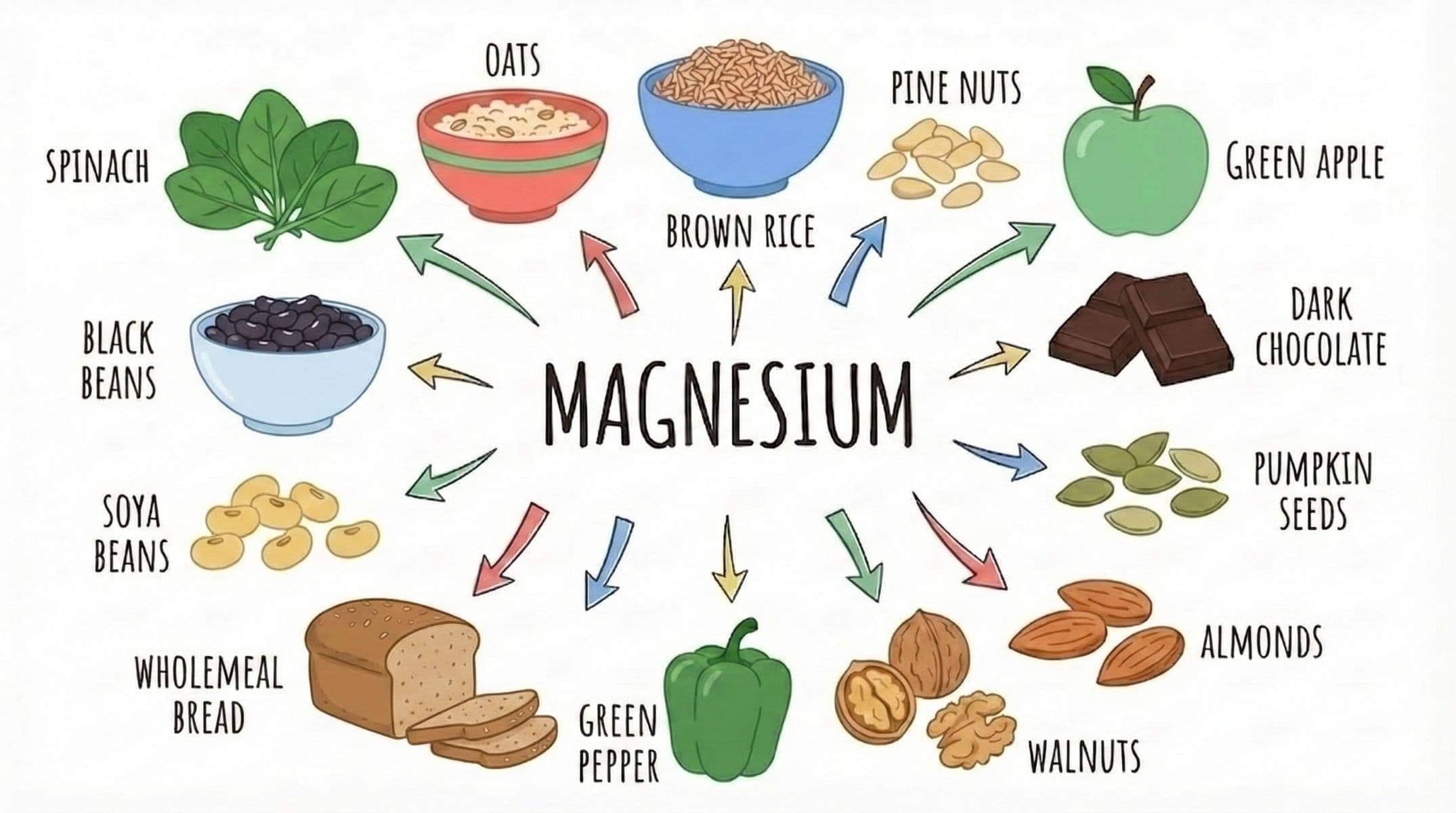
Leafy greens, nuts (especially almonds and cashews), seedsand legumes are excellent sources. Since stress depletes magnesium, and midlife is often a time of high stress, prioritising these foods is a gentle way to support your nervous system.
3. Tryptophan and the "Sleepy" Snack
You may have heard that turkey makes you sleepy. That is because of tryptophan, an amino acid that acts as a precursor to serotonin and melatonin - the hormones that regulate your sleep-wake cycle.
If you're prone to waking up hungry or alert, a small, strategic pre-bed snack might be helpful. The aim is not a full meal, but a few bites to bridge the gap until morning.
Snack Tip: The Sleep Bridge If you wake up frequently at 3 AM, try a small snack about 45 minutes before bed. Combine a tryptophan source with a small amount of complex carb (which helps the tryptophan reach the brain).• Option A: Half a banana with a teaspoon of almond butter.• Option B: An oatcake with a slice of turkey or hummus.• Option C: A small glass of warm milk (dairy or fortified soy).
High-Signal Insight: It Might Not Just Be Menopause
Here is something that often flies under the radar. We tend to attribute every sleep issue in midlife to "the change", but there is another player to watch out for: Sleep Apnea.
As protective hormones decline and muscle tone changes, women's risk for Obstructive Sleep Apnea (OSA) rises significantly6. Unlike the stereotype of the loud, snoring male, symptoms in women can be subtle - morning headaches, insomnia or simply feeling unrefreshed despite hours in bed. If you snore or gasp for air, it's worth discussing with your GP. Treating apnea can transform your sleep quality in ways nutrition alone cannot.
Common Myths vs Reality
Navigating advice can be tricky. Let's clear up a few misconceptions.
| The Myth | The Reality |
|---|---|
| "It's just hot flushes waking me up." | While common, many women wake due to cortisol spikes, anxiety or primary sleep disorders without having a flush at all7. |
| "I can catch up on sleep with naps." | Long naps can steal "sleep pressure" from the night. It's better to maintain a consistent wake-up time to anchor your circadian rhythm. |
| "There is nothing I can do; I just have to wait it out." | Absolutely not. Between nutritional changes, CBT for Insomnia (CBT-I) and medical support, most women can significantly improve their sleep8. |
Building a Sleep-Sanctuary Routine
Beyond what you eat, how you prepare for sleep matters immensely. Your body is working harder to regulate itself, so your environment needs to step up to support it.
- Temperature Control
Your body needs to drop its core temperature to initiate sleep. Keep your bedroom cool (around 16-18°C is ideal). Layer your bedding so you can easily throw off a duvet during a flush without freezing five minutes later.
- Morning Light
It sounds counterintuitive, but good sleep starts in the morning. Getting natural daylight within an hour of waking helps set your circadian clock, making it easier to fall asleep 16 hours later.
- The Wind Down
With progesterone low, you cannot rely on your brain to simply "switch off" like it used to. You need a transition buffer. This could be 20 minutes of reading, a warm bath or gentle stretching.
A Note on Supplements
While food is always first, supplements can be supportive. Melatonin is widely discussed; while it may help you fall asleep, evidence suggests it's less effective for preventing those middle-of-night wake-ups9. Isoflavones (from soy or red clover) have shown promise in some studies for reducing hot flushes, which may indirectly improve sleep10. Always chat with a healthcare professional before starting new supplements to ensure they are safe for you.
You Have Choices
The 3 AM wake-up feels lonely, but It's a biological signal, not a personal failure. Your body is asking for different support than it needed ten years ago. By stabilising your blood sugar with protein-rich meals, creating a cool and calm environment and being gentle with yourself during this transition, you can help your body find its rhythm again.
Tonight, try the "Sleep Bridge" snack if you have been waking up alert. It's one small, positive step you can take for your rest right now.
References
- Baker FC et al., 2018, "Sleep problems during the menopausal transition: prevalence, impact and management challenges", Nature and Science of Sleep.
- Sleepstation, 2021, "Menopause and Sleep", Sleepstation (NHS partner).
- Brighten J, 2023, "Perimenopause Sleep Issues: Reasons & What Helps", Dr. Jolene Brighten.
- Kling J, 2023, "Why alcohol and menopause can be a dangerous mix", Mayo Clinic News Network.
- Abbasi B et al., 2012, "The effect of magnesium supplementation on primary insomnia in elderly", Journal of Research in Medical Sciences.
- Jehan S et al., 2017, "Sleep Disorders in Postmenopausal Women", Journal of Sleep Disorders & Therapy.
- Attarian H et al., 2015, "Treatment of chronic insomnia disorder in menopause", Menopause.
- Women's Health Concern, 2025, "Menopause and Insomnia: Fact Sheet", British Menopause Society.
- NAMS, 2022, "Sleep Changes in Menopause", HealthCentral / NAMS.
- Daily JW et al., 2021, "Isoflavones in the Treatment of Menopause-Related Symptoms", Nutrition Reviews.