
For years, the loudest voice in the room for many of us has been appetite. It's that constant hum, sometimes a shout, telling us to snack, to seek comfort or to clear the plate. Then came the new wave of GLP-1 medications - semaglutide and tirzepatide - and suddenly, for millions of people, the room went quiet.
The silence of "food noise" is often described as a relief, a newfound freedom that makes weight management feel possible for the first time1. But this quiet brings a unique paradox: how do you nourish a body that isn't asking for food?
When your appetite is effectively on mute, nutrition stops being about willpower and starts being about strategy. The medication handles the quantity, but you still have to handle the quality. It's a partnership.
The Science of the Silence
"I had no idea how much food preoccupied me until the noise was gone. It was like a constant compulsion to eat… and now it's quiet."
To navigate this new landscape, it helps to understand why your dinner plate suddenly looks like a mountain. GLP-1 receptor agonists work by mimicking a natural hormone that your gut releases after eating. They act on the brain's appetite centres - specifically the hypothalamus - to turn down hunger signals and turn up satiety2.
Simultaneously, they slow down gastric emptying3. Food stays in your stomach significantly longer, which means you feel full faster and stay full for hours. This isn't just a feeling; it's a physiological brake system.
While this mechanism is brilliant for creating a calorie deficit, it creates a nutritional challenge. The goal here isn't to force-feed, but to make every small eating window count.
Priority One: The Muscle Mandate
If there is one non-negotiable rule when taking these medications, it is protein.
When we lose weight rapidly, our bodies tend to break down both fat and muscle for energy. Research indicates that without intervention, anywhere from 25% to 40% of the weight lost on GLP-1 therapies can be lean muscle mass4. This matters because muscle is your metabolic engine; losing it can lower your metabolic rate, making it harder to maintain your weight later.
To protect your lean mass, experts recommend aiming for roughly 1.0 to 1.5 grams of protein per kilogram of body weight5.
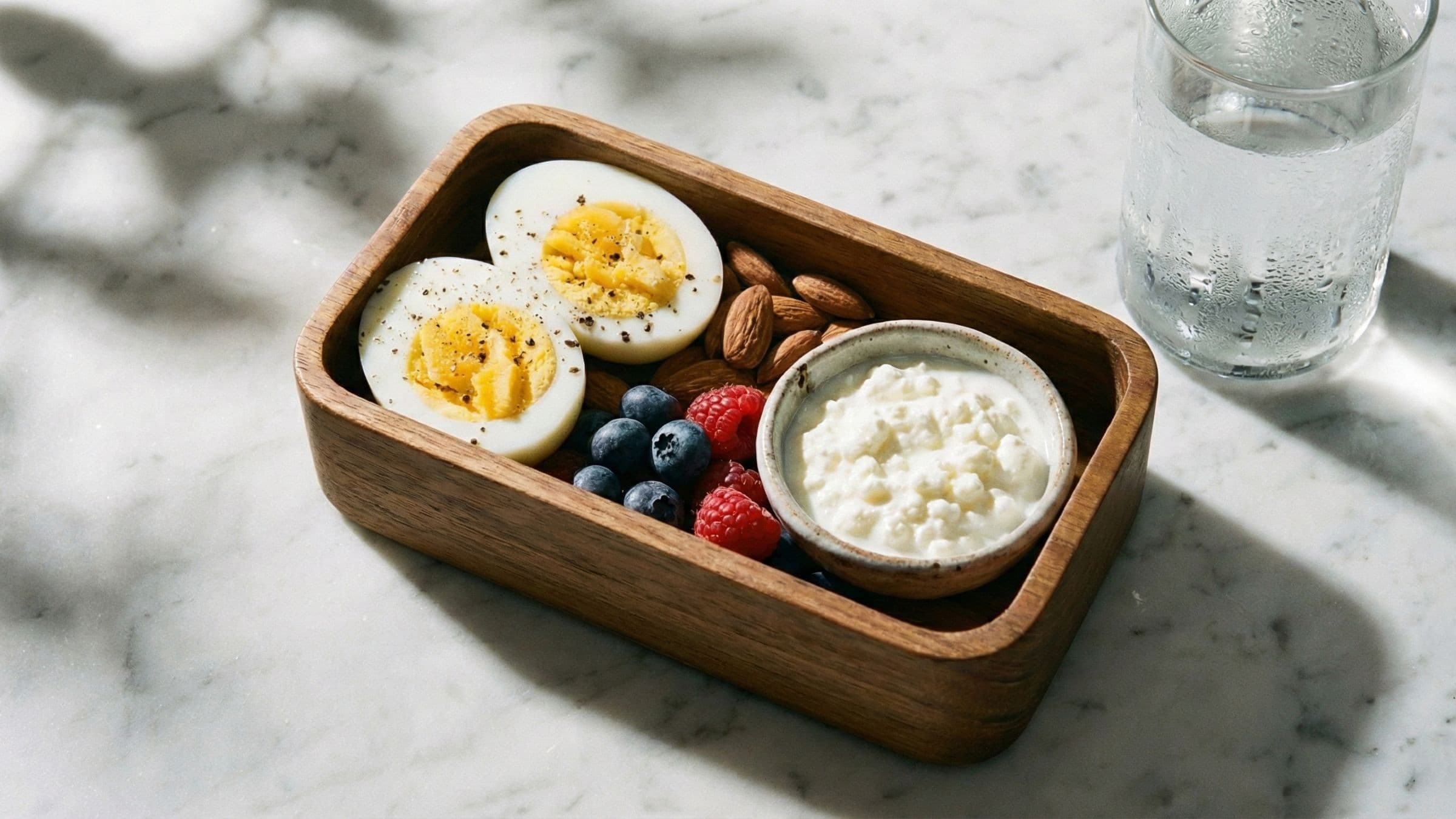
Quick Fact: Consuming adequate protein spread throughout the day stimulates muscle repair better than eating it all in one sitting6. Think of protein as a safety net—Greek yoghurt, cottage cheese, eggs, or a quality shake are perfect because they don't require much chewing.
The Nutrient Density Challenge
With GLP-1s, your stomach's "real estate" is limited. You no longer have the luxury of spending that space on empty calories. If you're eating 1,200 calories a day but 500 of them come from biscuits, you're missing essential nutrients.
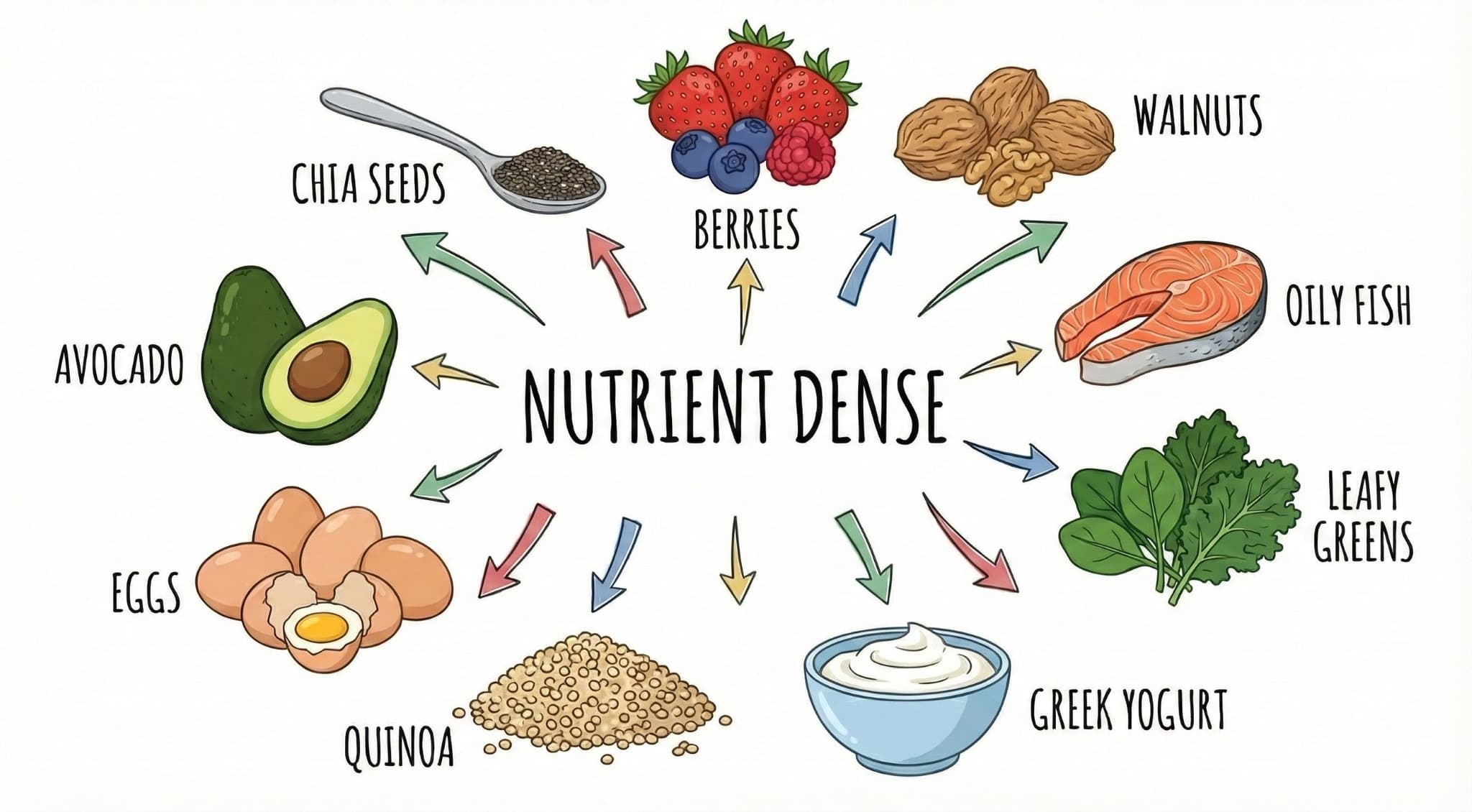
- Eggs: Packed with choline and B vitamins.
- Berries: High fibre and antioxidants, low volume.
- Oily Fish: Omega-3s and protein in a small package.
- Leafy Greens: Spinach wilts down to almost nothing but delivers iron and folate.
It's about efficiency. You are trying to pack the nutrition of a full day into a much smaller volume of food.
Navigating the Side Effects
It's impossible to talk about nutrition on these medications without addressing the side effects. Nausea and constipation are the most common uninvited guests7, and they directly impact what you can eat.
Managing Nausea
Nausea is often the result of slowed gastric emptying. If you eat too much, or too fatty a meal, food sits there and signals distress.
Snack Tip: Keep a "nausea rescue" kit. Ginger chews or tea are scientifically backed to help settle stomachs8. Cold foods often smell less intense than hot foods, making them easier to tolerate when you're feeling delicate.
The Constipation Connection
Because digestion is slower and food volume is lower, things can back up9. The solution is a trifecta: hydration, fibre, and movement. Thirst signals can diminish alongside hunger so aim for 2-3 litres of fluid daily.
The "Little and Often" Strategy
Traditional meal times might not work for you anymore. Sitting down to a full plate at 7pm might feel overwhelming. A "grazing" approach is often better tolerated5.
| Traditional Pattern | The GLP-1 Approach | Why It Works |
|---|---|---|
| Breakfast: Large bowl of cereal & toast | 8am: Protein smoothie with spinach | Liquid nutrition is easier to digest and hydrates you. |
| Lunch: Heavy sandwich & crisps | 11am: Hard-boiled egg & nuts | Small volume, high nutrient density. |
| Dinner: Large pasta dish | 2pm: Half a turkey wrap | Spreading intake prevents the 'stuffed' feeling. |
| Snack: Late night biscuits | 6pm: Small bowl of lentil soup | Warm, fibre-rich and light on the stomach before bed. |
Micronutrients: The Invisible Gaps
When you eat significantly less, you naturally ingest fewer vitamins and minerals. Vitamin B12, iron and calcium are specific nutrients of concern5.
Mini Checklist: Are You Covering Your Bases?
- B12: Are you eating animal products (eggs, dairy, meat)? If not, are you supplementing?
- Calcium: Are you getting 2-3 servings of dairy or fortified alternatives?
- Hydration: Is your urine pale? Dark urine is a sign you need more water immediately.
- Fibre: Are you having a bowel movement regularly?
For many, a high-quality daily multivitamin serves as a sensible insurance policy. It doesn't replace food, but it fills the cracks in a restricted diet.
Safety and Risks: Listen to Your Body
Rapid weight loss is thrilling, but if it happens too fast, it can stress the gallbladder and lead to hair thinning or fatigue8.
Alcohol also hits differently. Because your stomach empties slowly, alcohol absorption can be unpredictable, and it can worsen dehydration and nausea12. Proceed with caution and never on an empty stomach.
Myths vs Facts
Myth: "If I'm not hungry, I shouldn't eat."
Fact: Your hunger cues are chemically dampened, but your metabolic needs remain. You need to meet a baseline of nutrition to support your immune system and brain function5.
Myth: "I can eat whatever I want because the drug does the work."
Fact: You will lose weight on a calorie deficit, but you won't necessarily be healthy. You can be thin and malnourished.
Myth: "I don't need to exercise because the weight is falling off."
Fact: Exercise is arguably more important now. Resistance training acts as a signal to your body to keep your muscle and burn the fat instead4.
Practical Steps for Your Journey
Navigating nutrition on GLP-1s is a skill you build. It requires a shift from intuitive eating (which relies on hunger cues you no longer hear) to intentional fuelling.
- 01.Schedule it: Set alarms on your phone for snacks if you tend to forget to eat.
- 02.Prep ahead: Have boiled eggs, chopped fruit or protein shakes ready. Decision fatigue combined with low appetite usually leads to skipping meals.
- 03.Track loosely: Checking your protein intake occasionally ensures you aren't falling drastically short.
Pro Tip: If you are struggling to eat, drink your calories. A smoothie with protein powder, oats, spinach and berries can deliver a balanced meal without the heavy feeling of solid food.
It is a strange sensation to have to remind yourself to eat, but it is also an opportunity. You are no longer at the mercy of cravings. By prioritising protein, staying hydrated and respecting your body's new rhythm, you can ensure that as the weight comes off, the vitality stays.
References
- Salamon M, 2023, "Beyond appetite suppression", Harvard Women's Health Watch.
- Collins L, Costello RA, 2024, "Glucagon-Like Peptide-1 Receptor Agonists", StatPearls.
- Diabetes UK, 2023, "What is Wegovy? Uses, How it Works and Side Effects", Diabetes UK.
- Prado C et al., 2024, "Muscle loss with GLP-1 agonists", Lancet Diabetes & Endocrinology.
- Mehrtash F et al., 2025, "I Am Taking a GLP-1 Weight-Loss Medication—What Should I Know?", JAMA Internal Medicine.
- Endocrine Society, 2023, "Consuming more protein may protect patients taking semaglutide from muscle loss", Endocrine Society News Room.
- Wilding JPH et al., 2021, "Once-Weekly Semaglutide in Adults with Overweight or Obesity", New England Journal of Medicine.
- Mayo Clinic Staff, 2024, "Managing common side effects from weight-loss drugs", Mayo Clinic Diet Blog.
- Rubino D et al., 2022, "Two-year effects of semaglutide in adults with overweight or obesity", Nature Medicine.
- Beckett L, 2023, "'I miss eating': the truth behind the weight loss drug that makes food taste disgusting", The Guardian.
- Drugs.com Medically Reviewed, 2023, "Can you drink alcohol on Ozempic? What are the risks?", Drugs.com.
- Johnson B et al., 2025, "Investigating nutrient intake during use of GLP-1 RAs for weight management", Frontiers in Endocrinology.
- Iepsen EW et al., 2023, "Lean body mass following weight loss with GLP-1 receptor agonists versus other methods", Scientific Reports.